
How do our brains create memories?

Recently, I studied how events tied to high levels of surprise or personal connection are often remembered more vividly. It made me think about how my most authentic memories often stem from moments of joy, fear, and even surprise. Memory is something we experience everyday—from remembering a childhood birthday to the smell of your favourite meal—our ability to store, retrieve, and even forget information shapes much of our lives. But have you ever wondered what really happens inside our brains when we form a memory? And how emotions influence our cognitive processes?
The Basics of Memory Formation
Memory formation begins with encoding, which is when sensory information enters our brain. When you see, hear, or feel something, your brain takes that sensory data and converts it into a format that can be stored for later use. This first step relies heavily on attention—if you’re distracted or not focused, your brain might not encode the information properly, and it may not become a memory.
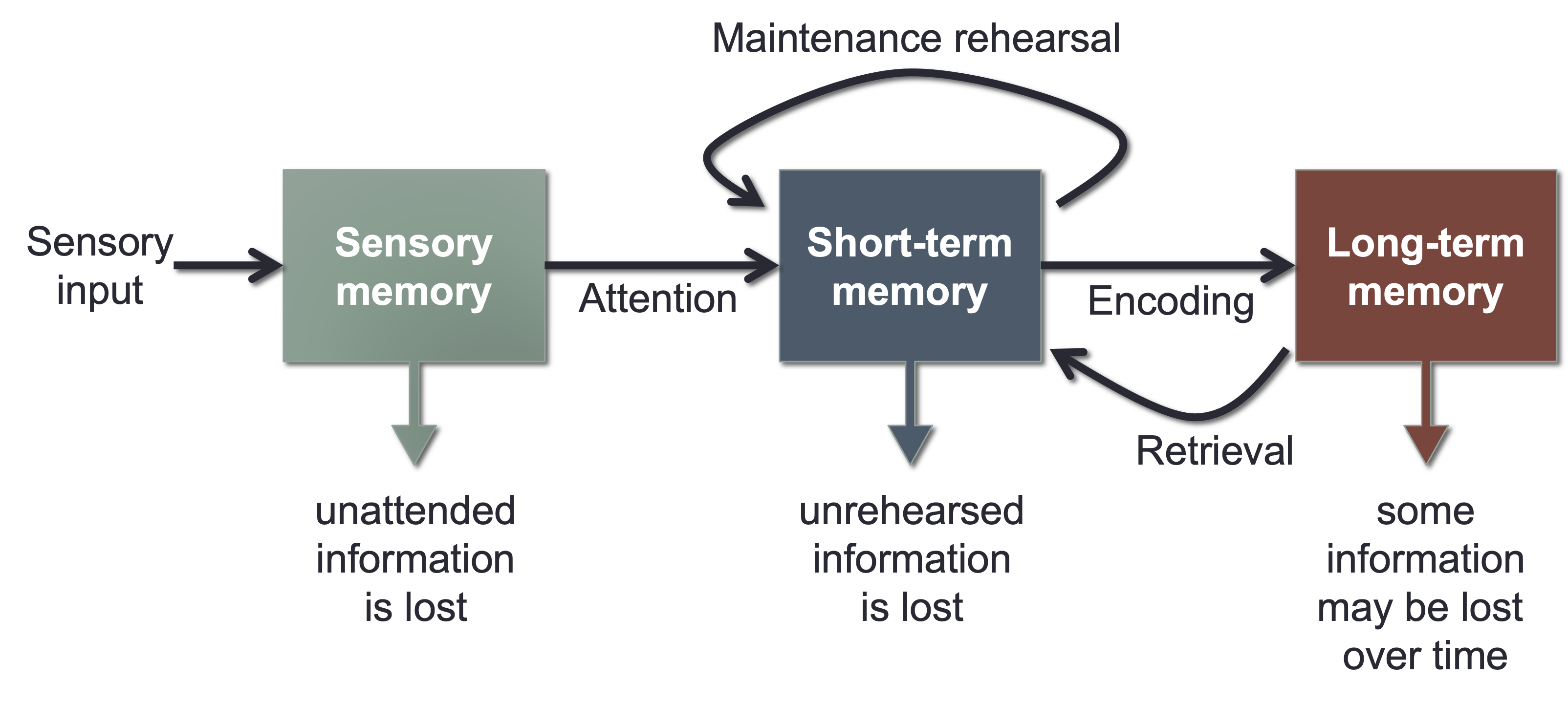
Image credit: Bob's Think Tank. Once information is encoded, it enters short-term memory, where it is temporarily held before either being discarded or transferred to long-term memory. Short-term memory can hold information for just a few seconds to a minute—like a mental notepad that lets you remember a phone number long enough to dial it.
Turning Short-Term Memory Into Long-Term Memory
The process of turning short-term memories into long-term ones is called consolidation. For memories to become permanent, the brain has to stabilise them over time. This is where the hippocampus, often called the brain's memory centre, comes in. The hippocampus is like a bridge, moving memories from short-term storage in the frontal cortex to long-term storage in other parts of the brain, even the cortex itself.
To help visualise things, I’ve included a labelled diagram below showing the hippocampus and its connection to other memory-related areas. Image credit: News-Medical.
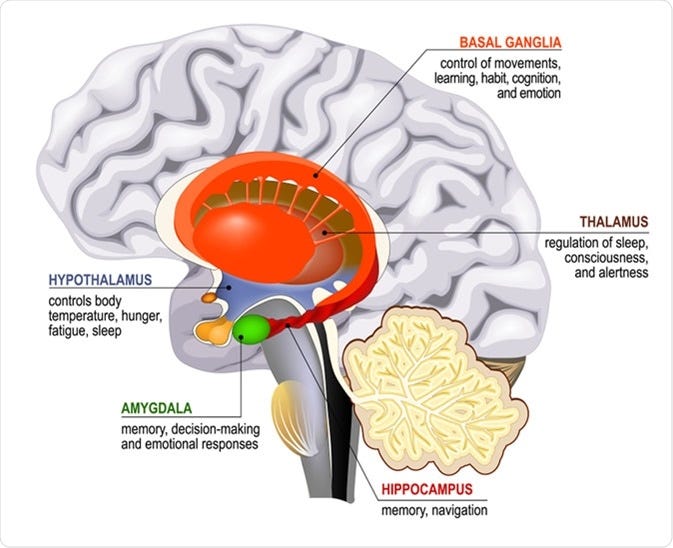
Interestingly, consolidation doesn’t happen instantly. Research shows that memories can take up to hours or even days to solidify. Not all memories are stored the same way—some might be stored as vivid sensory experiences, while others are stored more abstractly. This helps explain why some memories are extremely clear and detailed, while others feel fuzzy or fragmented.
The Role of Emotions
Psychological and neuroscientific research shows that emotion and cognition are deeply connected, with our feelings shaping how we process and recall information. As mentioned earlier, emotional events often stand out as vivid, persistent memories, but even these can fade over time. So, what makes some emotional memories so enduring, and why do others eventually weaken?
This question was explored by Brown and Kulik, who proposed the theory of flashbulb memories. These are exceptionally vivid, detailed “snapshots” of surprising and emotionally significant events. The researchers argued that these memories are created not just by an event exceeding critical levels of surprise, but also by the personal relevance of the event. The amygdala, which processes emotions, works closely with the hippocampus during these moments. When emotions run high, whether it’s joy, fear, or sadness, the amygdala signals the hippocampus to store the memory more strongly. This leaves behind a lasting imprint of the event’s details and circumstances, making these memories particularly hard to forget.
Why We Forget
Now, even though the brain has an incredible ability to create memories, forgetting is inevitable. Some memories fade simply because we don’t revisit or rehearse them, while others are lost due to interference—when new information clashes with older memories. For example, learning something new can sometimes overwrite what we already know, especially if the two pieces of information are quite similar.
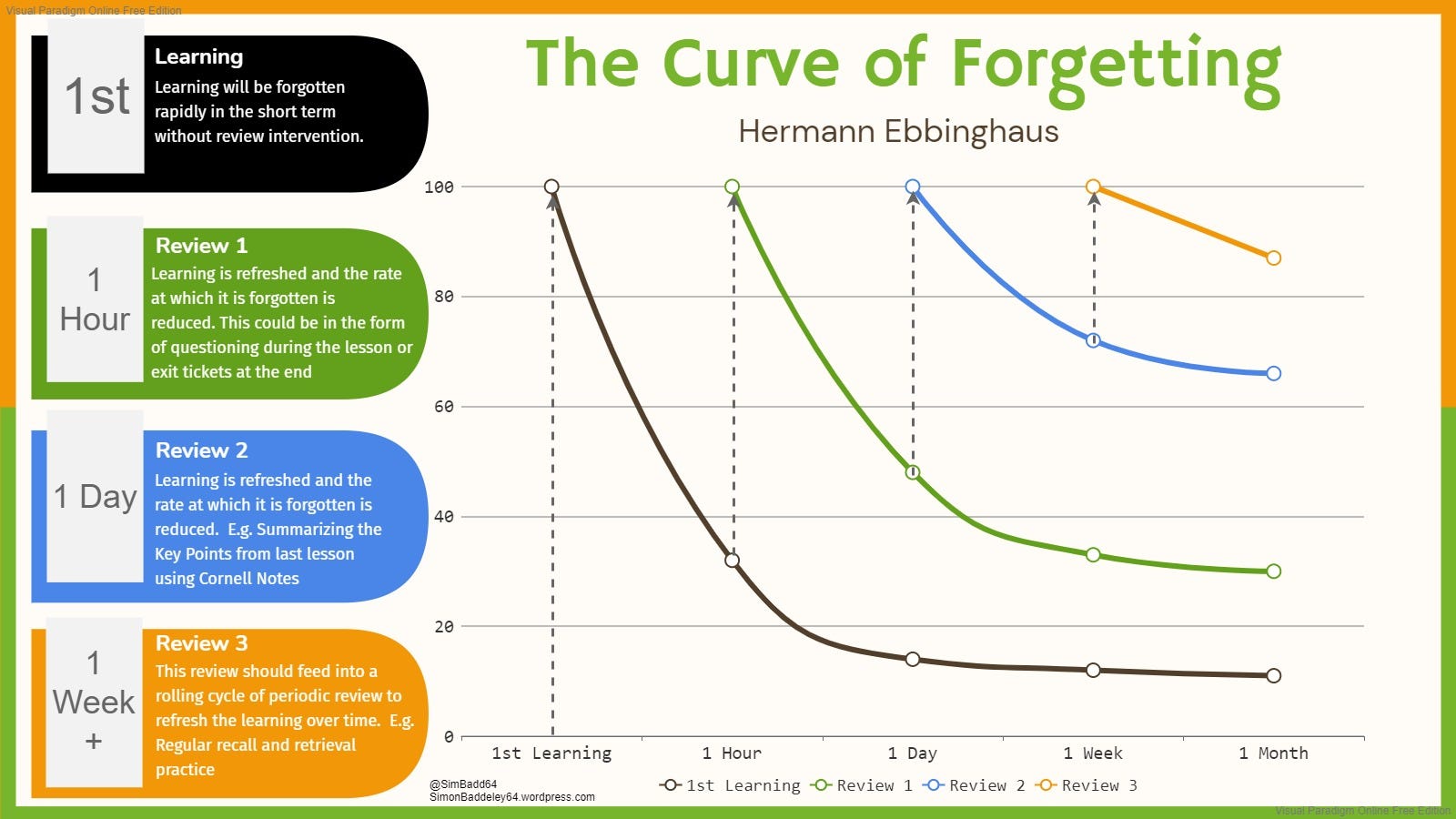
The above diagram (Image credit: Simon Baddeley) represents the Ebbinghaus forgetting curve. Simply put, this curve shows how we forget over time without revisiting information. Forgetting happens rapidly at first, with most information lost in the first few hours or days. But after this quick drop, forgetting slows down. The more we revisit or practice things, the easier we can strengthen our memory of it, and hence, the better we can remember it later.
Another reason we forget is memory decay. This occurs when the neural connections that support a memory weaken over time, much like an unused muscle. Interestingly, not all forgetfulness is bad. Our brain is designed to prioritise important information and let go of less relevant details, which helps us avoid cognitive overload.
Conclusion
To conclude, memory is not a perfect system that records every detail of our lives. It’s a dynamic process influenced by brain structures, emotions, and even time. While we may not remember things exactly as they happened, our ability to retain and recall information shapes how we understand the world and learn from past experiences.
If you enjoyed this article and want to get in touch to discuss more on this area of cognitive neuroscience, please feel free to write to me at shindeanisha22@gmail.com! I’d love to hear your thoughts or discuss further.